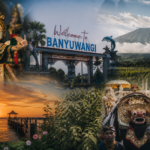
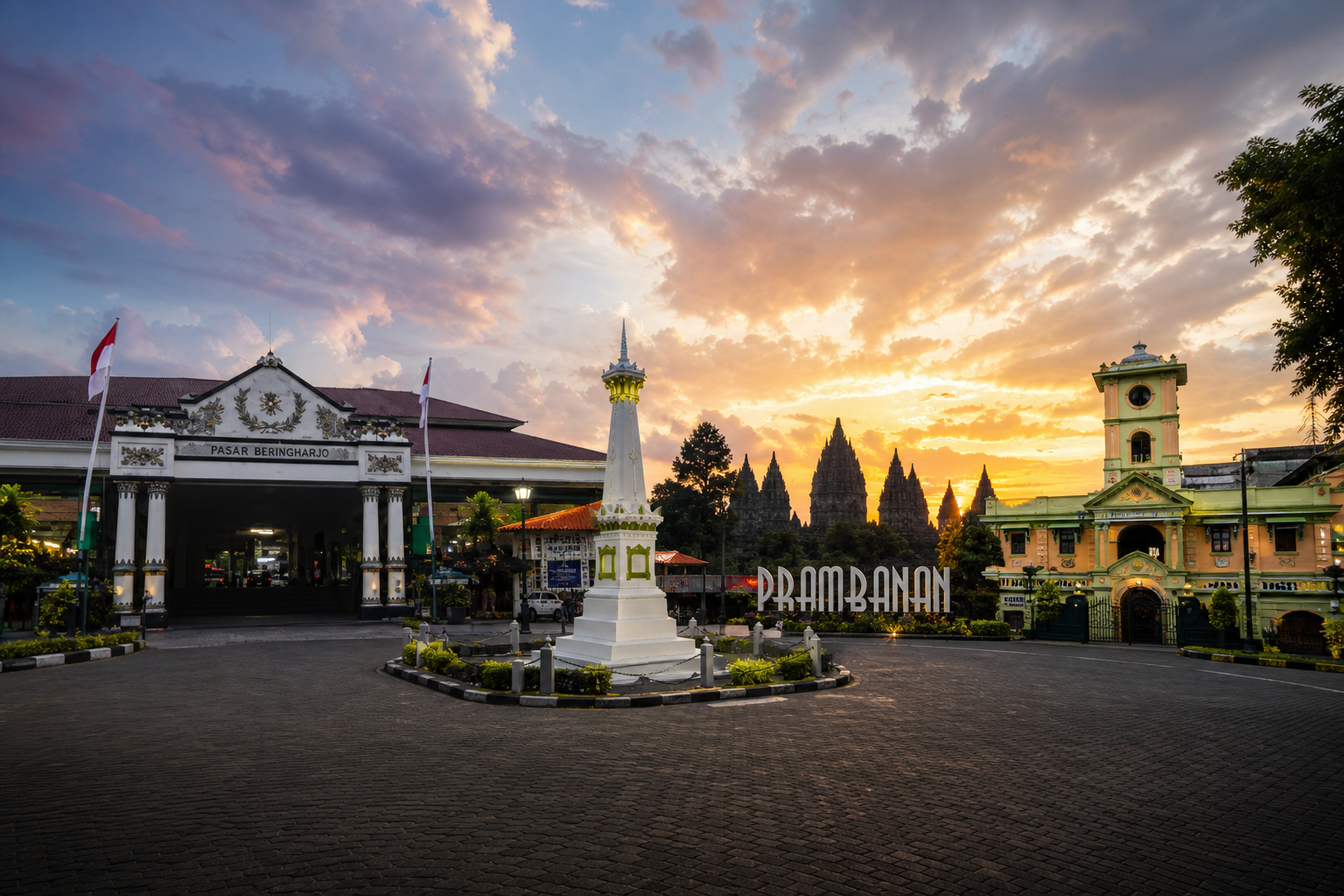
Yogyakarta is a Special Region located in south-central Java, Indonesia. Geographically, it is framed by the active volcano Mount Merapi (2,930 m) to the north and the Indian Ocean to the south. The city sits on the fertile Kedu plains, crossed by rivers such as the Opak, Code, and Progo, which flow southward and have historically supported dense agricultural communities and thriving urban settlements.
In terms of climate, Yogyakarta has a tropical monsoon character with two main seasons. The wet season (October–April) brings heavy rainfall totaling around 2,000 mm per year, while the dry season (May–September) offers lower humidity and clear skies — the best time for sightseeing. Temperatures remain consistently warm throughout the year, ranging between 26–32 °C, making the city accessible for visitors in any season.
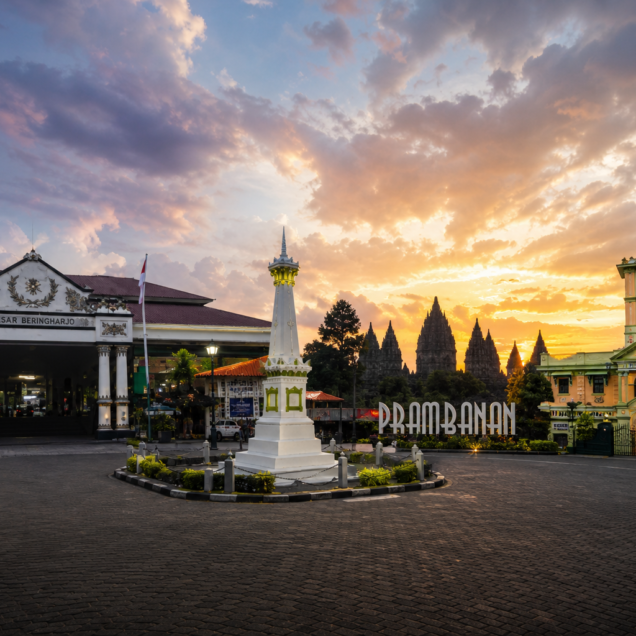
Culturally, Yogyakarta is widely regarded as the soul of Javanese civilization. It is home to the Kraton (the Sultan’s Palace), which remains an active center of royal Javanese tradition. The city is renowned for its batik textile artistry — a UNESCO Intangible Cultural Heritage — as well as wayang kulit (shadow puppetry) and classical Javanese dance. Within easy reach are two of Southeast Asia’s greatest archaeological wonders: Borobudur, a 9th-century Buddhist stupa, and Prambanan, a magnificent Hindu temple complex dedicated to the Trimurti.
Uniquely among Indonesian provinces, Yogyakarta retains its own sultanate governance as a Special Region, blending modern urban life with centuries of royal and artistic tradition.
Sights



Info
Traveling to Yogyakarta: What You Need to Prepare
Before heading to Yogyakarta, proper preparation will ensure a smooth, enjoyable, and culturally respectful journey.
Documents & Visa. Make sure your passport is valid for at least six months beyond your travel date. Citizens of most countries are eligible for a free 30-day visa on arrival at Yogyakarta International Airport (YIA) or Adisutjipto Airport. Always carry printed copies of your hotel reservations and return flight tickets as immigration may request them.
Health Precautions. Visit your doctor before departure and consider vaccinations for Hepatitis A, Typhoid, and Tetanus. Pack a travel health kit containing mosquito repellent (DEET-based), sunscreen, antidiarrheal medicine, oral rehydration salts, and any personal prescription drugs. Travel insurance with medical coverage is highly recommended.
Clothing & Packing. Yogyakarta’s tropical climate demands light, breathable clothing. Bring a rain jacket or compact umbrella if traveling during the wet season (October–April). Modest dress — covering shoulders and knees — is required when entering temples such as Prambanan, the Kraton palace, and mosques.
Money. The currency is Indonesian Rupiah (IDR). Exchange at official money changers or use ATMs widely available in the city. Yogyakarta is one of Indonesia’s most affordable destinations — budget travelers can get by comfortably on IDR 200,000–400,000 per day.
Connectivity. Purchase a local SIM card from providers like Telkomsel or XL upon arrival. Download Gojek or Grab for convenient ride-hailing, Google Maps offline for navigation, and Google Translate with the Bahasa Indonesia pack for communication.
Best Time to Visit. The dry season from May to September offers the most comfortable conditions. Align your visit with cultural events like the Sekaten festival or Wayang kulit performances for an unforgettable Javanese experience.